

The wrong debate: better biomass maps won't fix a broken carbon baseline
The carbon market has an integrity problem. Everyone knows that. But it is not the one anyone is talking about anymore. The problem is in the carbon baseline.
The major market upset was driven by West et al. (2023), who argued that many forest carbon projects overestimated deforestation rates in their baselines (see our response to their article). We contest the methods used, but the authors raise a pertinent point: existing methods do not do a good enough job of causally measuring the true impact of carbon projects.
Since then, the market has shifted. There is a greater desire for "high-integrity" credits. Good. But many appear to wilfully ignore the criticisms the market has faced, claiming we can restore trust through better measurement and improved predictive modelling. Better measurement is welcome, of course. But while the industry obsesses over which biomass map to trust, the real uncertainty, the real risk, is somewhere else entirely. It is in the carbon baseline.

Efforts continue to eke out greater performance from forest allometry and machine learning upscaling. Allometry also leans on wood density, which varies several-fold between species; belian, the Bornean ironwood we are named after, sits near the top of the range for Bornean trees. New global and regional canopy height models are released on a near-weekly basis, with growing potential for model ensembles and fine-tuning. Perhaps all of this is soon to be made redundant by ESA's P-Band SAR BIOMASS mission.
None of this is wasted effort. We have been building biomass maps for years and welcome every advance. But having built them ourselves across multiple carbon projects, we have come to realise something uncomfortable. The real uncertainty is not in precisely how many tonnes of carbon are in the forest. It is in what would have happened to the forest without the project. The spread between biomass maps is small. The spread between a good baseline and a bad one is enormous.
The carbon credit integrity crisis everyone is ignoring
Carbon credit integrity depends on many things. But the one question that determines whether a credit represents a real change in atmospheric CO₂ is simple: would it have happened anyway? Get that wrong and five different ratings agencies will each charge you to tell you the credit is worthless. It does not matter how precisely you measured the trees if your counterfactual scenario is more fiction than fact.
The industry knows this. It is exactly where past integrity failures came from. Carbon baselines that assumed the future would look like the past. Projects claiming credit for "saving" forests that were never under threat. That is why baseline has become a loaded term. People would rather focus on biomass maps, where you can at least get precision, than touch the baseline question, where you cannot hide behind a pretty map.

It is not just about the biomass maps
A road gets built. A policy changes. Commodity prices shift, or a new president takes office. The real trajectory of deforestation changes, and a historical baseline built from historical trends cannot keep up. It is looking backwards when it should be taking in the full picture. What is happening right now, to similar forests, that are not protected? That wider view is what matters.
Some have taken this further, arguing that because social-ecological systems are complex, causal attribution is fundamentally impossible and carbon markets should be abandoned altogether (Rana et al., 2026). We disagree. Complexity is not a reason to give up. It is exactly the kind of problem science exists to solve, and as we argued at ML4EO 2026, pixel-perfect classification means little if the landscape-level counterfactual is wrong.
The carbon market has spent years refining how we measure trees. It is time to be just as rigorous about what we compare these measurements against. Designed experiments like the Sabah Biodiversity Experiment show one path: build the controls in from the start.
belian.earth exists to solve the carbon baseline problem. Read about how counterfactual baselines work.
Updated 15 September 2026.
Stay in the loop
Stay up to date with developments in independent reference area selection and carbon market baselining.
Policy context
The frameworks behind this piece, explained in plain English.
ICVCM
The ICVCM sets the global threshold standard for quality in the voluntary carbon market. Its Core Carbon Principles and CCP label determine which credits are credible, which methodologies are sound, and where the market needs to go further: REDD+, reforestation, permanence, leakage, and buffer pools.
Read morePolicySBTi
SBTi sets the bar for corporate climate ambition: which emissions companies must cut, when, and by how much, and what role carbon credits, land use, and nature play in a credible net-zero claim. FLAG shapes demand from land-intensive companies; the Corporate Net-Zero Standard shapes the broader credit market.
Read moreRelated posts

Who's Afraid of the Big, Bad Forest?
by Chloé Naomi Swickard
Permanence has been a sticking point for Nature-Based Solutions since the Kyoto debates. The ICVCM Permanence Trust may finally unlock long-term durability. Even then, the deeper question of how nature gets financed will remain.
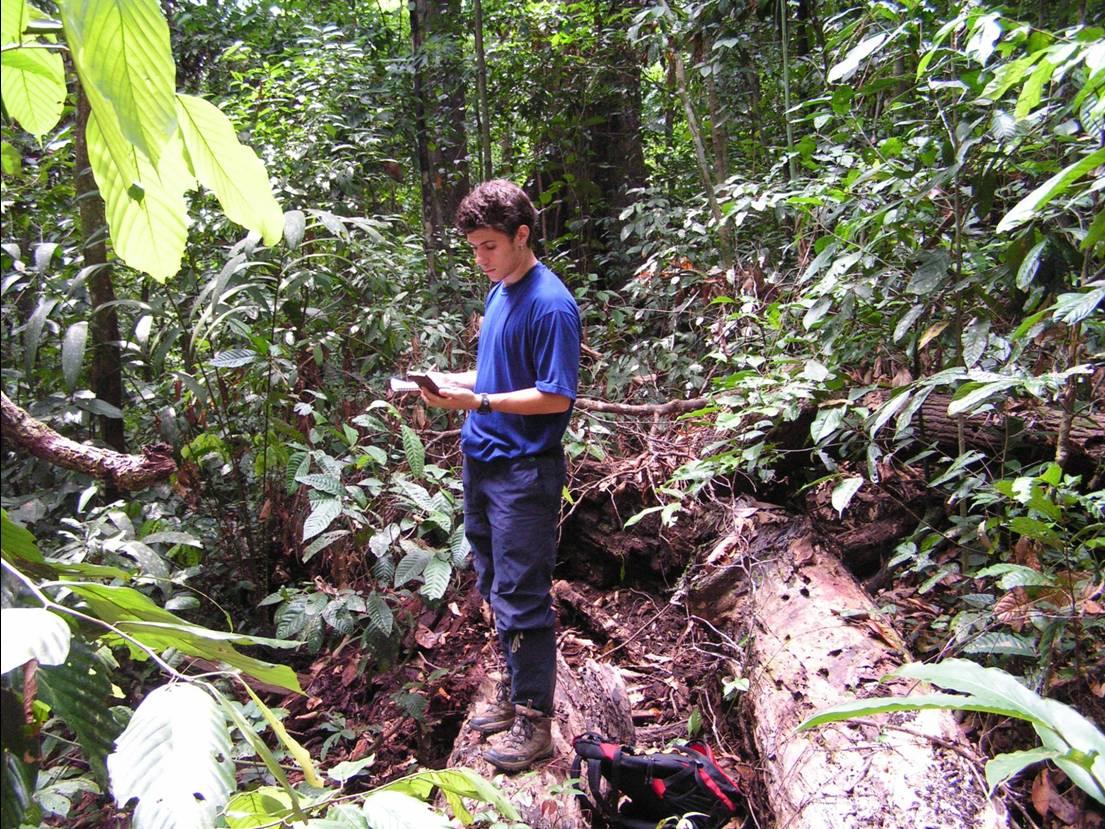
Liana cutting, designed experiments, and carbon baselines
by Christopher D. Philipson
Liana cutting accelerates the recovery of logged tropical forest three times faster than tree planting, at one tenth of the cost. The Sabah Biodiversity Experiment shows why designed experiments matter for forest carbon baselines.
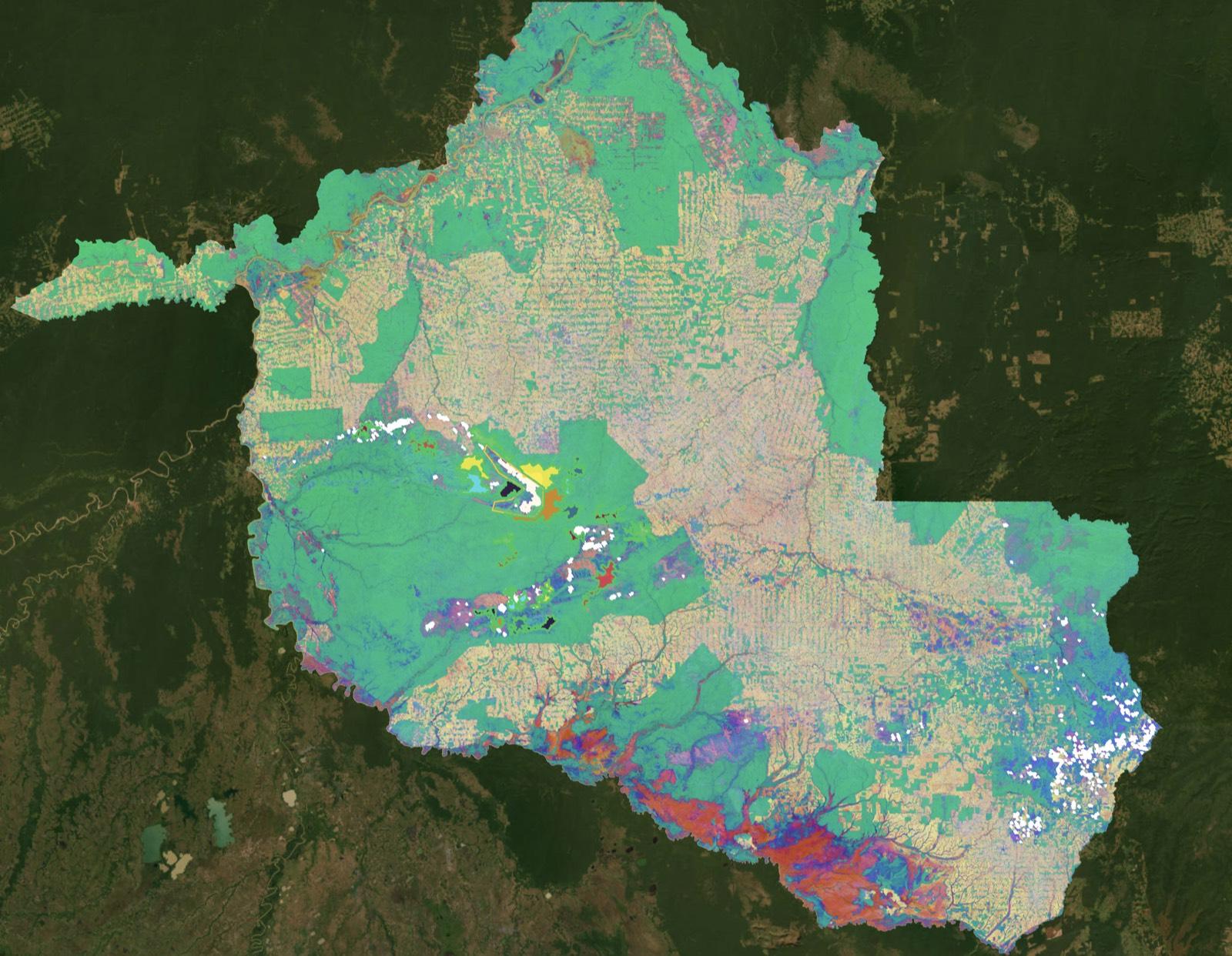
VM0047's brave call is your ARR project's defining moment
by belian.earth
VM0047 locks the developer's matched reference areas at validation and keeps them fixed for the full crediting period. That single choice defines your ARR project's baseline for decades.