

Lock the reference areas, protect the baseline: VM0047's deliberate choice
VM0047 made a brave call. It locks the developer's matched reference areas at validation and keeps them fixed for the project's full crediting period. For most ARR projects under the VCS Standard, that crediting period runs for 20 to 40 years. Long-term commitments are good for forests, but they mean you have to make the right choice up front. The separate question of what happens after the crediting period, the post-crediting permanence debate around the ICVCM Permanence Trust and Article 6.4, is where the next set of NBS battles are being fought. Our Article 6 policy explainer tracks where those rules stand.
The choice was deliberate. A baseline that lets developers quietly upgrade their comparators when the numbers start looking too good is not a baseline at all. By fixing the matched controls at validation, VM0047 closes that loophole. It is one of the more credibility-protecting moves in modern carbon methodology design.
But that brave methodological call makes the developer's matching a defining moment. One choice at validation, which is locked for decades.
Why your VM0047 control plots define your project for the full crediting period
Reference areas drive the performance benchmark for every issuance over a project's life. Each verification computes the benchmark on the same locked control plots, using whatever new stocking-index data has accrued. The benchmark updates over time. The matched controls behind it do not.
VM0047 makes this explicit. Once the match passes Verra's quality test, "the final selection of control plots and their respective weights are then fixed... for the duration of the crediting period." The same control plots, with the same weights and coordinates, will define your project's benchmark for twenty, thirty, sometimes more than forty years.
This is not one of many small calls in project development. It is the single largest methodological choice a developer makes.
What makes a VM0047 baseline defensible?
Reference area selection is also the part of the methodology most exposed to challenge. Even when the developer does the work with care and integrity, with expert analysts and the best available data, the selection is open to questions and attack. Which covariates were used? What distance threshold was applied? Which polygons were excluded? Why one set of plots and not another?
This is not a hypothetical concern. Across the broader carbon credit literature, baseline construction is consistently identified as the lever where overstatement enters the system. Recent work in Nature Communications attributes systematic over-crediting in forest carbon programmes to selection-bias mechanisms in baseline determination (Swinfield et al. 2026). Reference area selection is the step under scrutiny in most of these accounts.
A global evaluation of voluntary REDD+ projects published in Conservation Biology (Guizar-Coutiño et al. 2022) found that a more defensible matching procedure can both confirm real reductions and substantially adjust their estimated scale. The methodology behind the match matters.
Buyers know this. A project that can show its reference areas were chosen by a third-party process, with documented covariates and reproducible outputs, has a stronger position with both buyers and ratings than one that picked its own.
The challenge for the developer, of course, is that even doing the selection well is not the same as being seen to have done it well. Conflict-of-interest logic is hard to refute when the developer holds the pen.
What does independent VM0047 reference area selection look like?
Independence alone is not enough. A consultant or service provider can be accused of the same kinds of bias as a developer the moment they are paid to produce a result. What matters is whether the selection is reproducible, auditable, and removes the role of judgement as much as possible.
There are two key elements to selecting reference areas: finding matching areas, and the criteria for how they match. VM0047's prescribed procedure for matching is based on the closest controls on the stocking index, which are then locked in and used for the benchmark. But how the candidate pool is built is even more important. Two areas can look identical on the stocking index while sitting in completely different landscapes. A back garden surrounded by houses can match a forest patch on greenness alone. Without that context, the match returns plausible but wrong comparators. This is the pixel-level problem we discussed at ML4EO 2026: per-pixel accuracy means little if it produces matches that do not make landscape sense.
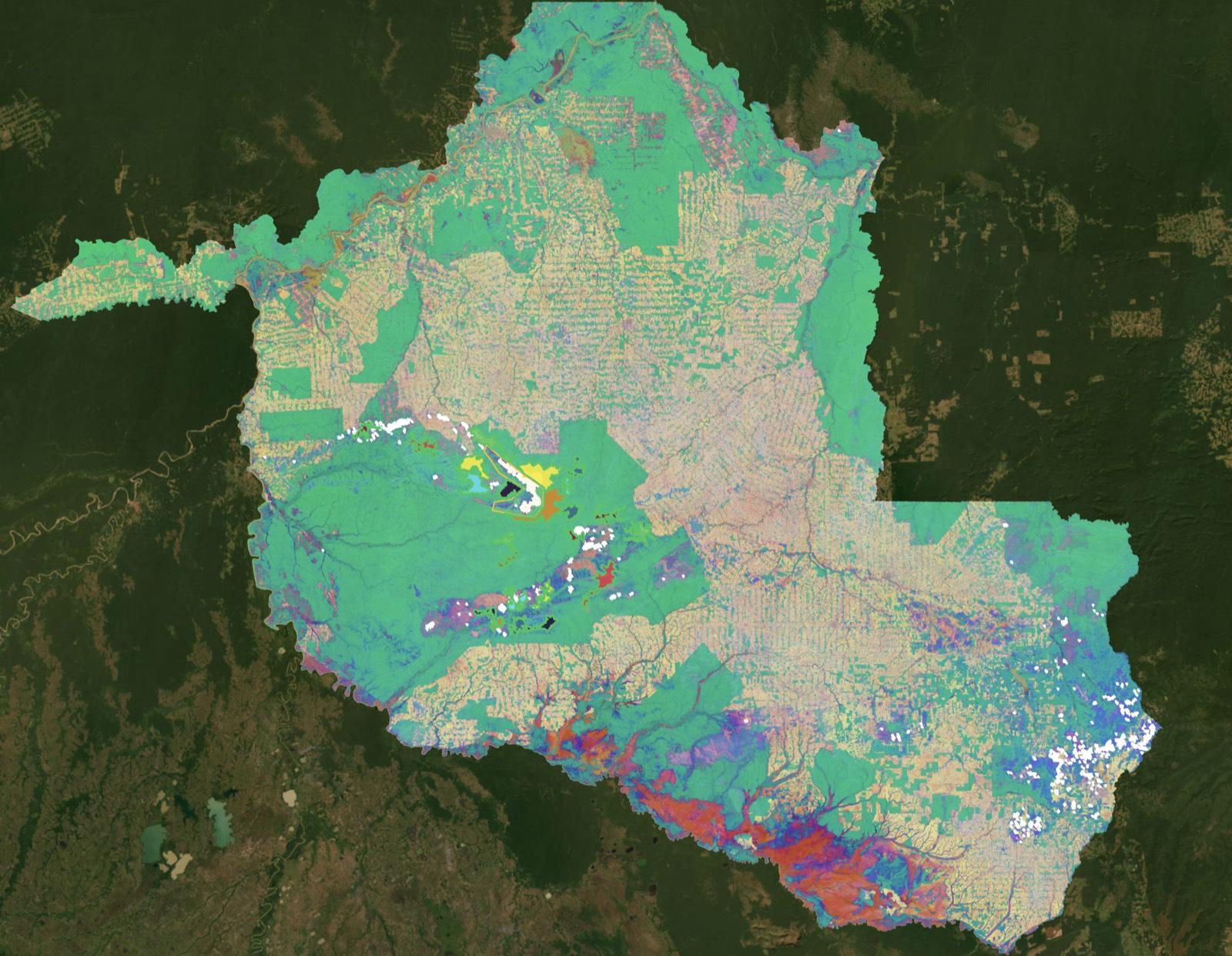
Independent VM0047 reference area selection, done well, means a third party identifies the candidate areas before the prescribed matching runs. Best practice is to use a process that another analyst running the same procedure would replicate exactly. The developer does not choose the inputs. The methodology runs as written within the regions returned.
The selection should be reproducible: same inputs, same outputs, regardless of who runs the procedure. It should be auditable, with every covariate, threshold, and exclusion documented and inspectable. It should be vendor-agnostic, sitting upstream of any biomass or stocking-index provider so the developer is not locked into a downstream stack. And it should be compliant with the methodology: VM0047's prescribed matching procedure runs as written within the candidate areas the search returns.
This is the service belian provides. We sit upfront in the developer's pipeline and run VM0047's prescribed matching as written within the regions we identify. We do not modify or replace any of Verra's prescribed procedures. We add an upstream step the methodology leaves to the developer. We make sure the procedures are run in a way that is reproducible and auditable, and free from any conflict of interest.
That distinction matters. The developer ends up with reference areas they can defend to a VVB, to a buyer, and to a ratings agency, because they did not pick them.
Faster baselines, faster credits
Reference area selection is also one of the most time-intensive parts of VM0047 baseline preparation. In-house, building the donor pool, running the matching procedure, and validating the quality thresholds can stretch across weeks or months of analyst time per project.
Independent automated selection compresses that timeline. The output arrives in days, not weeks. For developers, that means shorter project preparation, smaller upfront cost, and an earlier first issuance. For programmes operating across many sites, it shifts a one-off bottleneck into something predictable and budgetable. ARR economics are notoriously thin. Anything that compresses the path to first issuance moves projects that would otherwise be marginal into financial viability.
Faster, defensible baselines also help on the validation side. The cleaner and more auditable the selection record, the less time the validating body spends on questions during validation review. The benefits compound.
VM0047 is the right methodology. Make sure it runs on the right ground.
VM0047's lock-in is one of its strengths. It is also the reason the developer's first decision is heavier than any decision they will make later. Choose well, and the methodology rewards the project for the full crediting period. Choose poorly, and the project lives with that decision for the same length of time, and may lose credibility.
If you are working on VM0047 projects and want to stay up to date with developments in independent reference area selection, sign up below.
Updated 11 September 2026.
Stay in the loop
Stay up to date with developments in independent reference area selection and carbon market baselining.
References
Policy context
The frameworks behind this piece, explained in plain English.
ICVCM
The ICVCM sets the global threshold standard for quality in the voluntary carbon market. Its Core Carbon Principles and CCP label determine which credits are credible, which methodologies are sound, and where the market needs to go further: REDD+, reforestation, permanence, leakage, and buffer pools.
Read morePolicySBTi
SBTi sets the bar for corporate climate ambition: which emissions companies must cut, when, and by how much, and what role carbon credits, land use, and nature play in a credible net-zero claim. FLAG shapes demand from land-intensive companies; the Corporate Net-Zero Standard shapes the broader credit market.
Read moreRelated posts

Who's Afraid of the Big, Bad Forest?
by Chloé Naomi Swickard
Permanence has been a sticking point for Nature-Based Solutions since the Kyoto debates. The ICVCM Permanence Trust may finally unlock long-term durability. Even then, the deeper question of how nature gets financed will remain.

ML4EO 2026: Why Pixels Aren't Enough for Carbon Market Integrity
by belian.earth
We're sponsoring ML4EO again this year. Here's why the machine learning for earth observation community matters for carbon markets, and what it still gets wrong about pixels.
The carbon baseline problem nobody wants to talk about
by belian.earth
The carbon market has an integrity problem. But while the industry obsesses over which biomass map to trust, the real uncertainty is in the carbon baseline.