Research papers on vertebrate ecology & land use change
Monitoring, modelling and managing beaver (Castor fiber) populations in the River Otter catchment, Great Britain
Hugh Graham et al.
Ecological Solutions and Evidence, 2022
Population modelling of reintroduced Eurasian beavers in the River Otter catchment, Great Britain. The predicted population growth trajectories have since been confirmed by field surveys, demonstrating the reliability of the modelling approach.
Read more
Positive coexistence of water voles and beaver: water vole expansion in a beaver engineered wetland
Alan Puttock et al.
Mammal Communications, 2023
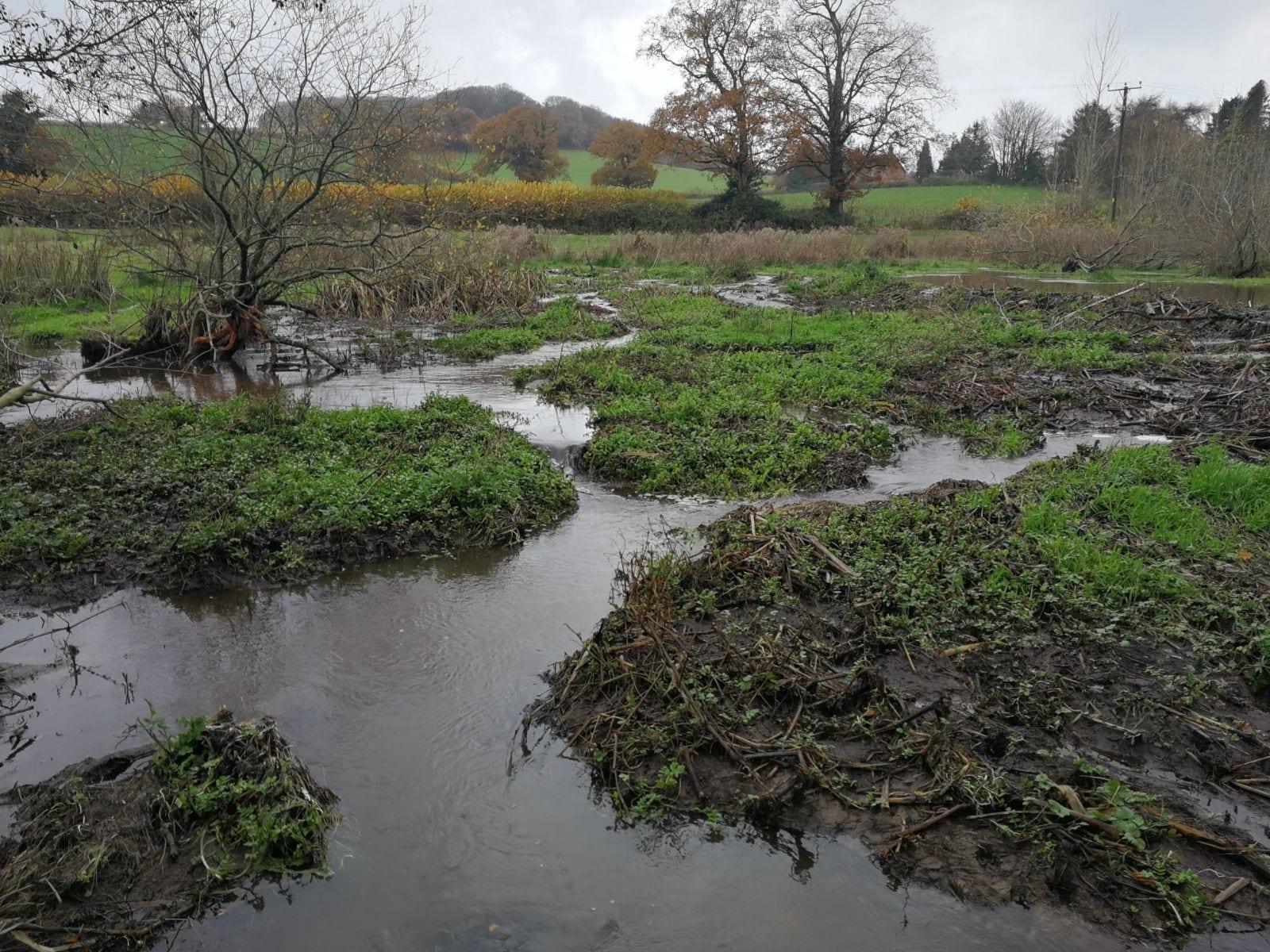
Critically endangered water voles expand within beaver-engineered wetland habitat, showing positive coexistence.
View on doi.org
Exploring the dynamics of flow attenuation at a beaver dam sequence
Hugh Graham et al.
Hydrological Processes, 2022
Flow attenuation dynamics at a beaver dam sequence quantified using high-resolution monitoring.
View on doi.org
Impacts of Four Decades of Forest Loss on Vertebrate Functional Habitat on Borneo
Natalia Ocampo-Peñuela et al.
Frontiers in Forests and Global Change, 2020
Four decades of forest loss have reshaped vertebrate functional habitat across Borneo.
View on doi.org
Beaver: Nature's ecosystem engineers
Richard Brazier et al.
WIREs Water, 2020
Reintroduced beavers act as ecosystem engineers across freshwater systems.
View on doi.org
Want more on vertebrate ecology & land use change?
Stay in the loop
Stay up to date with developments in independent reference area selection and carbon market baselining.