Backing the science behind forest conservation
Forests are going unprotected because the numbers that would justify protecting them are very hard to check.
Every forest carbon project rests on one figure: the baseline, which represents what would have happened to that land if the project had never existed. Today that figure is usually produced by the people being paid based on the result.
Tree planting has the same problem in reverse. A planted tree is easy to like. You can see it, count it and photograph it. The harder question is what would have grown there if nobody had planted anything? Sometimes the answer to that is, nothing would have grown there. Sometimes a seedling would have come up anyway, and might have done almost as well on its own. The difference between those two answers is where the uncertainty lies. Resolving which one is right reduces uncertainty in the baseline far more than measuring the trees to the nearest millimetre.
When the baseline is wrong, money goes to forests that were never at risk and away from the ones that were. The people living in those forests, and the biodiversity that depends on them, are the ones who lose.
We build the independent measurement that makes the number defensible and easily reproducible. We are a small team, with twenty years of forest science behind the methodology.
Funded by the European Space Agency
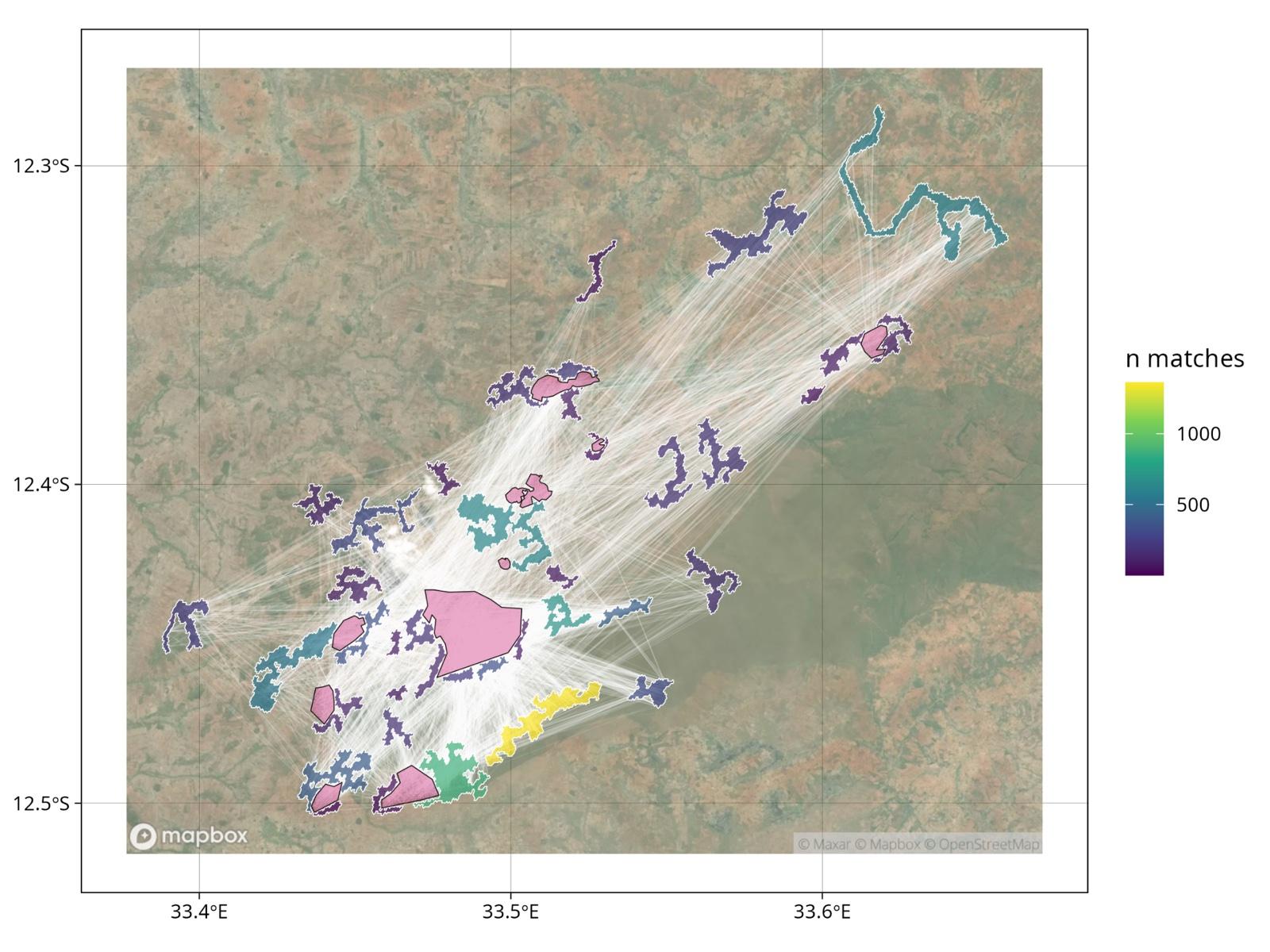
We built the first working version of our pipeline under an ESA Business Applications Kick-start activity. It selects the reference areas a project’s impact is measured against, from satellite data rather than from negotiation. The reference areas are chosen by the model, not by the developer, and the uncertainty around the result is quantified rather than assumed. It works at jurisdictional scale, and we tested it on forest sites in Sabah and southern Africa.
Read the full pageAlso supported by Innosuisse, the Swiss innovation agency. Venture Semi-Finalist 2026.
Venture Kick, the Swiss philanthropic start-up programme run by the Kick Foundation, selected belian.earth in September 2026 for Stage 1 of its three-stage funding process. Stage 2 follows in October 2026.
What funding would buy
Funding belian will deliver more open science. We believe in transparency and the Achilles heel of this market has often been black-box models that are hard to check. The more of the underlying work is public, from the methods and the reference data, to tools like a5R, the more the market can check its own numbers instead of taking them on trust. Some of that work we would do ourselves. Some would go to our scientific collaborators.
Commercial clients pay for the layer we build on top, the data that underpins their specific project baseline. With a growing need for accurate baselines to scale the market, there’s real potential for a financially viable product, and transparency in the methods and models is what gets the money to the right forests. We expect this will build into a commercially sustainable business and not require continued philanthropic funding.
Beyond the services valuable to this market is the work nobody will ever buy, but which has real value for decision makers around the world. Screening whole landscapes to show where forests are recovering on their own and where they are not is the clearest example. Governments and conservation organisations need that picture to spend public money well. No customer exists to pay for this kind of common good, which is exactly why it needs a different kind of funding.
How an impact investment could work
With no outside shareholders, this is the moment when an impact investment goes furthest. We can work with most funding structures. The simplest is a grant toward a defined piece of work, with the results published. A recoverable grant could also work, returned only if the commercial side reaches agreed revenue, so the same money goes on to fund something else afterwards. Some people simply want to support the science behind forest conservation, and that is welcome. Others would rather back something concrete: a specific tool, or a particular landscape screened properly. Tell us what you care about and we will tell you what it would take.
Get in touch for an impact investment
Anything sent here reaches us directly. Tell us what you have in mind and we will come back with a structure that could work.