What this paper found
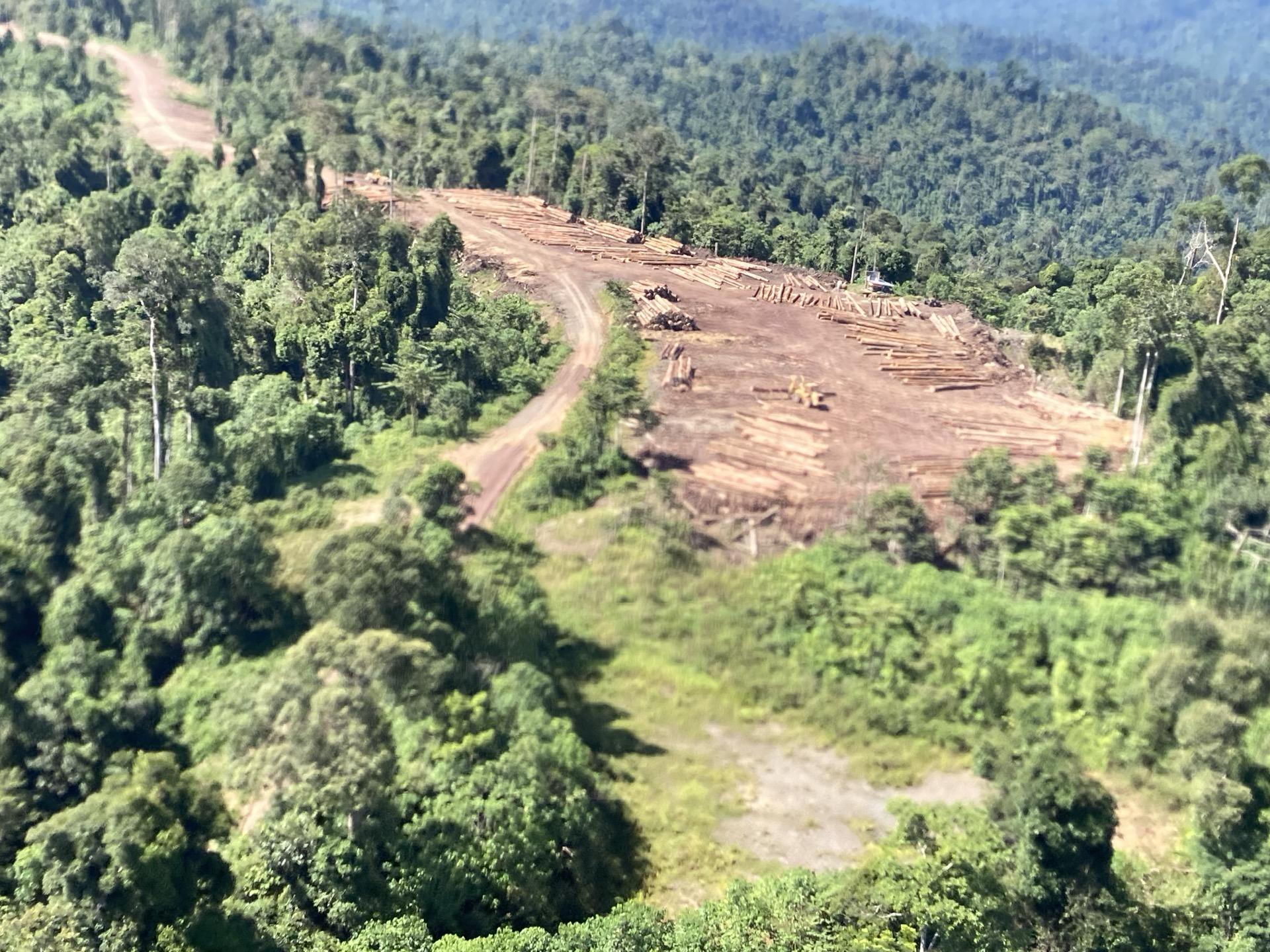
Two decades of permanent-plot data combined with airborne LiDAR biomass maps in Sabah, Malaysian Borneo showed that active restoration accelerated carbon recovery by around 50% compared with natural regeneration. The study provides a rigorous empirical benchmark for quantifying the additional carbon gains delivered by restoration interventions in logged tropical forests.
How this informs belian.earth’s work
Chris led this paper, which underpins how belian.earth thinks about counterfactual baselines for ARR projects. People often assume ARR is more tangible than avoided-deforestation because you can see a tree planted in bare ground. But the climate benefit only counts when compared against what natural regeneration would have delivered anyway, and that comparison requires a counterfactual, unless you have a designed experiment like this one.
The accompanying question for ARR is durability. For the policy side of how that gets managed, see Chloé Naomi Swickard's piece on permanence and the ICVCM Permanence Trust.
Frequently asked questions
How does active restoration affect carbon recovery in tropical forests?
+
A study in Sabah, Malaysian Borneo combining two decades of permanent-plot data with airborne LiDAR biomass maps found that active restoration accelerated carbon recovery by around 50% compared with natural regeneration. Both active restoration and natural regeneration depended on sustained protection from further disturbance. The study provides a rigorous empirical benchmark for measuring restoration efficacy in logged tropical forests. Comparing restored forest against naturally regenerating forest over two decades is effectively a counterfactual baseline approach, quantifying the additional carbon gains attributable to active restoration interventions.
Want more like this?
Read our take
Liana cutting, designed experiments, and carbon baselines
by Christopher D. Philipson
Liana cutting accelerates the recovery of logged tropical forest three times faster than tree planting, at one tenth of the cost. The Sabah Biodiversity Experiment shows why designed experiments matter for forest carbon baselines.
Read article
Stay in the loop
Stay up to date with developments in independent reference area selection and carbon market baselining.
Related papers
Liana cutting accelerates the structural recovery of once-logged tropical forests at a fraction of the cost of tree planting
Toby Jackson et al.
Current Biology, 2026
Read more
A trait-based trade-off between growth and mortality: evidence from 15 tropical tree species using size-specific relative growth rates
Christopher Philipson et al.
Ecology and Evolution, 2014
View on doi.org
The road to recovery: a synthesis of outcomes from ecosystem restoration in tropical and sub-tropical Asian forests
Lindsay Banin et al.
Philosophical Transactions of the Royal Society B, 2023
Read more
Citation
Philipson, C.D. et al. (2020). Active restoration accelerates the carbon recovery of human-modified tropical forests. Science. https://doi.org/10.1126/science.aay4490