What this paper found
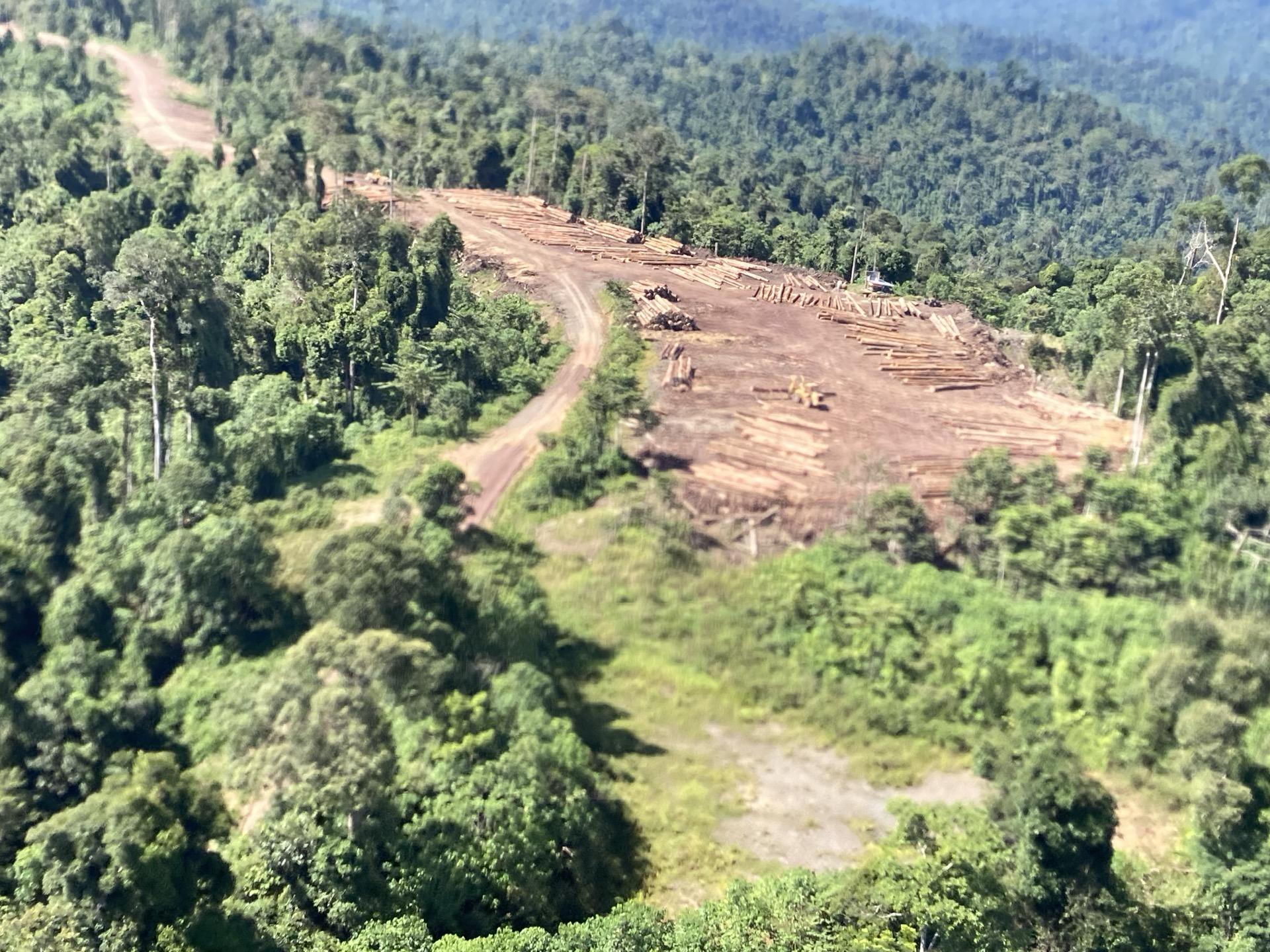
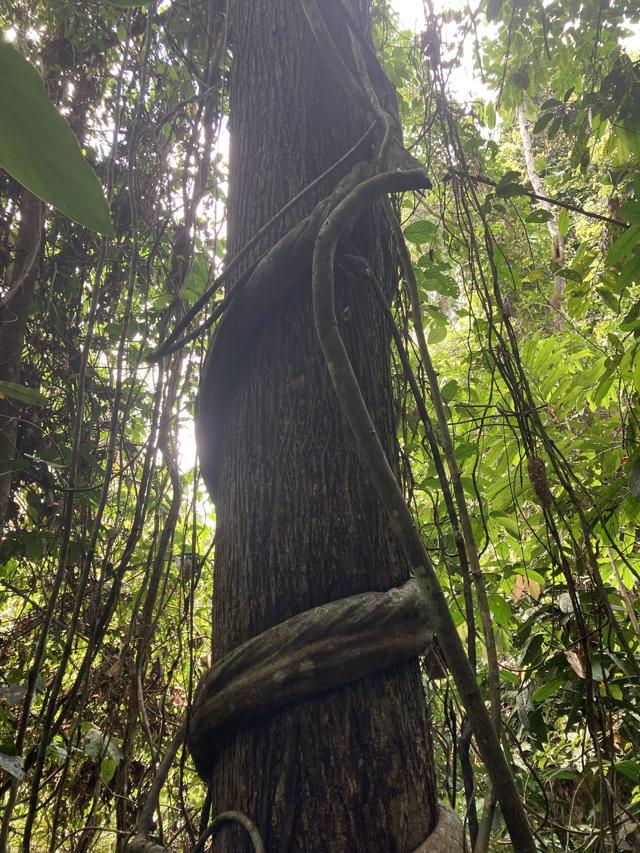
Repeated airborne LiDAR at the Sabah Biodiversity Experiment in Borneo showed that liana cutting sequestered carbon at roughly US$2 per tonne of CO₂ versus US$58 for enrichment planting. The treatment accelerated canopy recovery three times faster than enrichment planting and reduced tree mortality by around 50%.
How this informs belian.earth’s work
Designed experiments like the Sabah Biodiversity Experiment have matched controls built in from the start. That is exactly what new methodologies like Verra's draft M0274 require, bringing counterfactual dynamic baselines and matched controls together. This paper directly informs how we think about that work.
Results like these only matter if the carbon stays in the ground. For the long-tail question of how Nature-Based Solutions get held accountable for that, see Chloé Naomi Swickard's piece on the ICVCM Permanence Trust and the future of nature finance.
Frequently asked questions
How does liana cutting compare with enrichment planting for accelerating carbon recovery in logged tropical forests?
+
A study at the Sabah Biodiversity Experiment in Borneo used repeated airborne LiDAR (2013 and 2020) to compare carbon recovery in logged forest plots under liana cutting, enrichment planting, and untreated controls. Liana cutting accelerated canopy recovery roughly three times faster than enrichment planting, adding 3.7 metres of canopy height over 9 years compared to 1.6 metres over 18 years for enrichment planting, and reduced tree mortality by around 50%. About half the additional carbon came from faster canopy growth and the other half from avoided mortality. Because liana cutting is approximately ten times cheaper to implement, the cost per tonne of CO₂ sequestered was roughly US$2 for liana cutting versus US$58 for enrichment planting. The interventions tested are named use cases in Verra's draft methodology M0274 for enhanced forest sequestration with dynamic baselines using randomised control trials.
How does drought affect the carbon benefit of liana cutting in tropical forests?
+
A study at the Sabah Biodiversity Experiment in Borneo found that the positive effect of liana cutting on seedling performance was reduced during the 2015-2016 El Niño-induced drought (O'Brien et al. 2019, Journal of Applied Ecology). While liana cutting accelerates canopy recovery roughly three times faster than enrichment planting and reduces tree mortality by around 50% under typical conditions, climate stress can erode part of that benefit in dry years. This strengthens the case for monitoring restoration effects across multiple climate years and against designed control plots, rather than relying on before-and-after observation alone.
Want more like this?
Read our take
Liana cutting, designed experiments, and carbon baselines
by Christopher D. Philipson
Liana cutting accelerates the recovery of logged tropical forest three times faster than tree planting, at one tenth of the cost. The Sabah Biodiversity Experiment shows why designed experiments matter for forest carbon baselines.
Read article
Stay in the loop
Stay up to date with developments in independent reference area selection and carbon market baselining.
Related papers
Positive effects of liana cutting on seedlings are reduced during El Niño-induced drought
Michael O'Brien et al.
Journal of Applied Ecology, 2019
View on doi.org
Active restoration accelerates the carbon recovery of human-modified tropical forests
Christopher Philipson et al.
Science, 2020
Read more
A trait-based trade-off between growth and mortality: evidence from 15 tropical tree species using size-specific relative growth rates
Christopher Philipson et al.
Ecology and Evolution, 2014
View on doi.org
Citation
Jackson, T. et al. (2026). Liana cutting accelerates the structural recovery of once-logged tropical forests at a fraction of the cost of tree planting. Current Biology. https://doi.org/10.1016/j.cub.2026.04.056