

We have what's needed to manage permanence- is that the real issue?
Permanence has remained a core sticking point in Nature-Based Solutions since the first debates about including these activities in the Kyoto protocol. While Verra unlocked the first generation of AFOLU activities at scale, through the use of a Non-Permanence Risk Assessment and buffer pool approach, this hasn't been enough to bring NBS into compliance markets at scale.
Now that we've seen significant improvements in carbon accounting in these activities, will solving the permanence problem once and for all finally be the thing that unlocks Nature-Based Solutions at scale?
Under the Paris Agreement, permanence remains a sticky subject. New guidance needed for A/R PACM methodologies, namely the "Reversal risk assessment tool" and "Concept note: Options for the implementation of paragraph 62 of the 'Standard: Requirements for activities involving removals under the Article 6.4 mechanism" are in the Methodological Expert Panel's 2026 workplan, with an updated concept note expected by the end of this month.
Could a Permanence Trust unlock Nature-Based Solutions?
ICVCM also continues work on this subject through its ongoing work programmes, including exploring the concept of a "Permanence Trust" that could manage permanence monitoring and compensation, as needed, beyond the crediting period overseen by standards bodies.
Just this month, The American Forest Foundation and Kita have released a feasibility study for a Permanence Trust concept. Their findings support the concept's viability, and propose a structure drawing from existing approaches leveraged in other sectors. These aren't novel concepts, rather they resemble those in financial guarantee insurance, endowments and portfolio risk management.
Implementing the trust could help ensure that regardless of what happens at the end of the project crediting period, permanence is managed effectively in the long-term. It remains to be seen if this will satisfy the critics or influence the options soon to be released by the UNFCCC.
But let's assume they do- carbon markets finally start learning something from financial markets, leveraging those existing structures into something that looks robust enough to cover long-term durability issues. Is it enough?
I have to suspect it won't be. Why? Because, as important as permanence truly is, I don't believe this is the end of the story of making it work for nature.
What's the real problem?
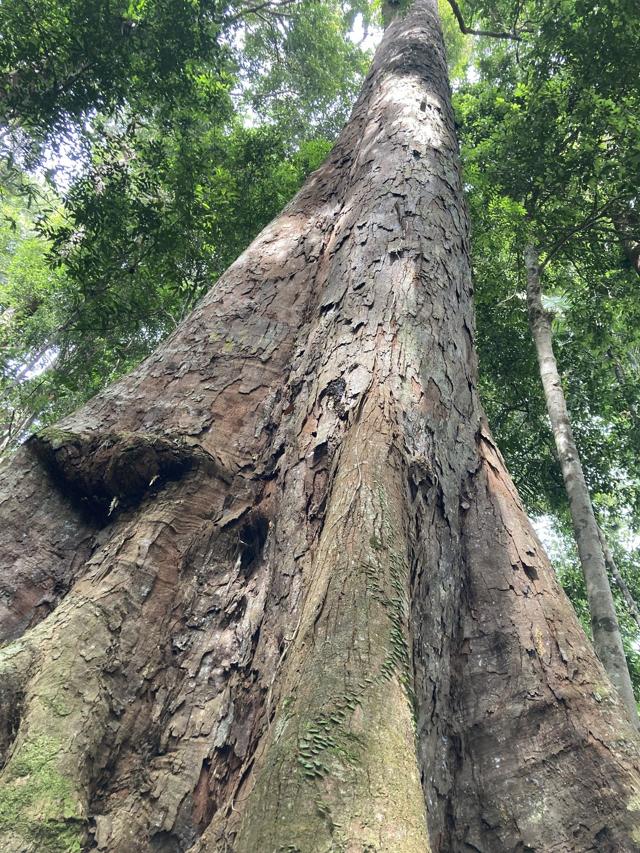
The financial system has spent decades building sophisticated instruments for almost every imaginable asset class. It has financed oil and gas pipelines, priced sovereign debt in politically unstable countries, packaged agricultural commodity risk, and written insurance against earthquakes and pandemics. And yet here we are, unable to finance forest protection and restoration at scale.
But the Article 6.4 permanence framework is not asking for 40-year buffers. It is asking for 100-year+ monitoring commitments with undefined thresholds for what constitutes negligible risk; requirements that go well beyond anything the voluntary carbon market has ever operationalised, and that most project developers cannot satisfy with existing financial instruments. That is a real constraint, not an invented one. But it is also a choice.
The framework could have been designed to be progressive, for example, requiring rigorous monitoring and portfolio-level risk management for the first decades, with clear, testable criteria for when liability can transfer to a trust or insurance mechanism. Instead it has defaulted to timescales that effectively require intergenerational financial commitment from private actors, without (yet) providing the instruments to make that commitment credible. Notably, conservation concessions: long-term agreements between governments and conservation organisations over land management, do precisely this: they create durable, legally enforceable stewardship obligations across generational timescales. Endowments and insurance approaches have also been leveraged in a wide-range of infrastructure projects. The architecture exists. The carbon market has simply not been required, or figured out how to use them. The Permanence Trust may finally break this log jam and incorporate some of these structures in a way that solves the permanence piece.
But even if we resolve the permanence question tomorrow, we will still be left with a deeper structural problem. What the financial system has not done well is create assets where the value accrues primarily to local communities rather than to a company with a board and a balance sheet. Forest carbon, done properly, is exactly that kind of asset. The carbon value in a well-managed community forest in the Congo Basin or a restored watershed in Colombia belongs to the people who live there, who maintain it, and who bear the cost of protecting it. Capital markets understand ownership, control, and exit. They are far less comfortable with stewardship, commons, and intergenerational obligation, even though, as conservation concessions demonstrate, the tools for exactly that kind of long-term commitment exist when the will is there.
Is this a failing of the financial system to understand nature, or a failure of the conservation community to understand how to structure finance?
And perhaps the deepest structural problem of all: nature has been providing its services for free for so long that we've built an entire economic system on the assumption that it always will. Forests have been filtering water, regulating rainfall, cooling cities, and absorbing carbon without ever sending an invoice. In economics, that's an externality. In practice, it means the global carbon system has been running on unpaid labour.
Meanwhile, we continue to lose ~20 football fields of forest every minute, and with them the wide range of essential ecosystem services they provide. We are close not only to climate tipping points, but many other ecological ones that depend on keeping these forests standing and restoring the ones already lost. We don't have time to wait for industrial CDR projects to actually produce sufficient, cost-effective removals. The question isn't either/or- we need both. But NBS can deliver real reductions now while conserving critical ecosystems that will never be the same if we lose them.
Maybe the real reason we haven't been able to finance nature at scale is that the value ultimately accrues to a community in the Amazon, not only to a company with a balance sheet. Maybe we just haven't managed to make nature enough of an asset class yet. And maybe, don't get me started, part of the problem is that "mother nature" has been expected to manage all of this on her own, without compensation, because that is apparently what mothers do.
Updated 11 September 2026.
Stay in the loop
Stay up to date with developments in independent reference area selection and carbon market baselining.
Policy context
The frameworks behind this piece, explained in plain English.
ICVCM
The ICVCM sets the global threshold standard for quality in the voluntary carbon market. Its Core Carbon Principles and CCP label determine which credits are credible, which methodologies are sound, and where the market needs to go further: REDD+, reforestation, permanence, leakage, and buffer pools.
Read morePolicyArticle 6
Article 6 is the international carbon market framework of the Paris Agreement, the mechanism that should, in theory, make forests financeable at scale. In practice, the rules governing removal activities have made this harder, not easier.
Read moreRelated posts
Liana cutting, designed experiments, and carbon baselines
by Christopher D. Philipson
Liana cutting accelerates the recovery of logged tropical forest three times faster than tree planting, at one tenth of the cost. The Sabah Biodiversity Experiment shows why designed experiments matter for forest carbon baselines.
VM0047's brave call is your ARR project's defining moment
by belian.earth
VM0047 locks the developer's matched reference areas at validation and keeps them fixed for the full crediting period. That single choice defines your ARR project's baseline for decades.

Why Forest Restoration Projects Need Robust Counterfactual Baselines
by Christopher D. Philipson
Every forest carbon project depends on a counterfactual baseline to demonstrate its impact. Whether avoiding deforestation or restoring degraded land, the underlying question is the same: what would have happened without the intervention?