
What are TNFD, SBTN and the Nature Positive Initiative?
836 organisations have committed to report against the recommendations of the Taskforce on Nature-related Financial Disclosures (TNFD). The financial institutions among them hold more than USD 26 trillion in assets. Against that, 18 companies have validated science-based targets for nature.
That gap is the story of corporate nature action so far. Companies are learning to describe their relationship with nature much faster than they are committing to change it.
On 13 October 2026, three bodies published coordinated updates designed to close that gap. TNFD released version 2.0 of its LEAP assessment approach and updated recommendations. The Science Based Targets Network (SBTN) released Science-Based Targets for Nature 2.0. The Nature Positive Initiative (NPI) launched the State of Nature Indicators and Metrics, now built into both.
The releases were timed ahead of the UN Convention on Biological Diversity’s COP17 in Yerevan, 19 to 30 October 2026. Their policy anchor is Target 15 of the Kunming-Montreal Global Biodiversity Framework (GBF). It calls on governments to ensure that large and transnational companies and financial institutions regularly monitor, assess and transparently disclose their biodiversity-related risks, dependencies and impacts, including through requirements.
TNFD: LEAP v2.0, assessment and disclosure
TNFD helps companies and financial institutions understand and report how they depend on and affect nature, and the risks and opportunities that follow. Its 14 recommended disclosures, published in September 2023, sit under four pillars: governance, strategy, risk and impact management, and metrics and targets. Its assessment method is LEAP: Locate, Evaluate, Assess, Prepare.
LEAP v2.0 is the first upgrade since 2023. It adds guidance on measuring the state of nature across land, freshwater and ocean, and on invasive alien species. It also covers environmental crime, nature in transition plans, portfolio assessment for financial institutions and multi-stakeholder landscape and seascape approaches. It sets out how LEAP connects to SBTN target-setting.
The updated recommendations add environmental crime guidance and final disclosure metrics on invasive alien species and state of nature. TNFD says this completes its metrics architecture.
The bigger change is institutional. TNFD has declared its assessment and disclosure guidance complete, with no further updates planned. It now supports standard setters. In September 2026, the International Organization for Standardization (ISO) approved a TNFD proposal to turn LEAP into an ISO standard, and TNFD will support that process over the next 18 to 24 months. On 22 October 2026, the International Sustainability Standards Board (ISSB) published an exposure draft on nature-related disclosures, drawing on TNFD, with comments open until 19 February 2027. It proposes a Practice Statement, which companies would not have to apply, and asks whether the final version should instead be a Standard.
Uptake is growing. More than 1,100 organisations now make at least one TNFD-aligned disclosure, averaging 8 of the 14.
SBTN: Science-Based Targets for Nature 2.0
SBTN turns nature ambition into dated, place-based targets that are independently validated. Companies move through five steps: Assess, Prioritize, Set targets, Act and Track. Targets cover freshwater, land and ocean, with climate targets set through its partner, the Science Based Targets initiative (SBTi).
Science-Based Targets for Nature 2.0 is about getting more companies through the door without lowering the bar. Companies could already start with one business unit or one segment of their value chain. Version 2.0 adds a Supplier Engagement target for companies that lack upstream location data, so they can set targets while they build traceability.
The land methods now carry three targets:
- No Conversion of Natural Ecosystems. Operations and upstream supply chains 100% deforestation- and conversion-free, with an upstream target date no later than 2030. Mining, infrastructure, construction and extractives get a dedicated pathway.
- Working Land Regeneration and Restoration. Absorbs the old Land Footprint Reduction target. Land Area targets cover natural land cover and footprint. Land Quality targets cover soil organic carbon, soil erosion and terrestrial acidification against ecoregion thresholds.
- Landscape Engagement. Applies wherever land pressures are material. Companies work with established local partners in priority landscapes, and SBTN’s claims guidance (v1.2, written for the first land methods) requires engagement through 2030, and the target must name the initiative and the part of the company responsible for it.
Freshwater targets strengthen the approach to groundwater and now cover pesticide impacts. Ocean version 2 depends on funding. SBTN expects future work to be targeted refinements rather than further overhauls.
SBTN links its land targets closely to SBTi’s Forest, Land and Agriculture (FLAG) targets, so for land-intensive companies nature and land-sector climate targets overlap heavily.
Uptake remains small. More than 300 companies are engaging with the methods, 45 have publicly signalled intent and 18 hold validated land or freshwater targets.
Nature Positive Initiative: a common yardstick
The Nature Positive Initiative is a coalition of 27 core members, including Conservation International, The Nature Conservancy, WWF, the World Resources Institute, the International Union for Conservation of Nature (IUCN), the Global Reporting Initiative (GRI), the UN-supported Principles for Responsible Investment (PRI), TNFD and SBTN. It holds the shared definition of “nature positive” and, now, the shared way of measuring it.
Before this release there were more than 600 state-of-nature metrics in circulation. NPI distilled them to four core indicators, each with site and landscape metrics:
- Ecosystem extent: are ecosystems expanding or shrinking?
- Ecosystem condition: is their condition improving or declining?
- Species extinction risk: how important is the area to overall species extinction risk?
- Species populations: how healthy are the populations present?
The set came out of a two-year process with more than 500 experts. It was piloted by 29 companies across six sectors at more than 50 sites in 23 countries. It measures outcomes, and is meant to sit alongside pressure and response metrics rather than replace them.
TNFD and SBTN have integrated the metrics. GRI is moving towards integration, the multilateral development banks’ Nature Working Group references them, and they can support disclosures under E4, the biodiversity standard of the EU’s European Sustainability Reporting Standards (ESRS).
How they fit together
Think of a company’s nature strategy as its finances. TNFD is the annual report: where the exposures sit and how they are managed. SBTN is the business plan: what will change, where and by when. NPI supplies the unit of account, so both documents count the same things the same way.
The practical gain is reuse. A company that maps its sourcing landscapes for LEAP can carry that data into SBTN’s Assess and Prioritize steps, then measure progress with the same four indicators it discloses.
Why it matters
For years, fragmented measurement was a credible reason to wait. With four agreed indicators built into both the leading disclosure framework and the leading target-setting method, that reason is gone.
The route to regulation is also clearer. TNFD’s work now flows into the ISSB and ISO, and GBF Target 15 asks governments to require nature disclosure. What started as voluntary guidance is on a path to becoming reporting infrastructure.
But disclosure is scaling far faster than commitment, and none of these frameworks moves money on its own. Measurement choices still matter: a recent preprint that tested site-screening metrics from LEAP and NPI’s consultation shortlist on hypothetical mining, onshore wind and agriculture portfolios found that every site was flagged as ecologically sensitive by at least one metric. Drax, which piloted the NPI metrics, reported that measuring nature trends accurately over time takes real time and resources.
Why this matters for REDD+
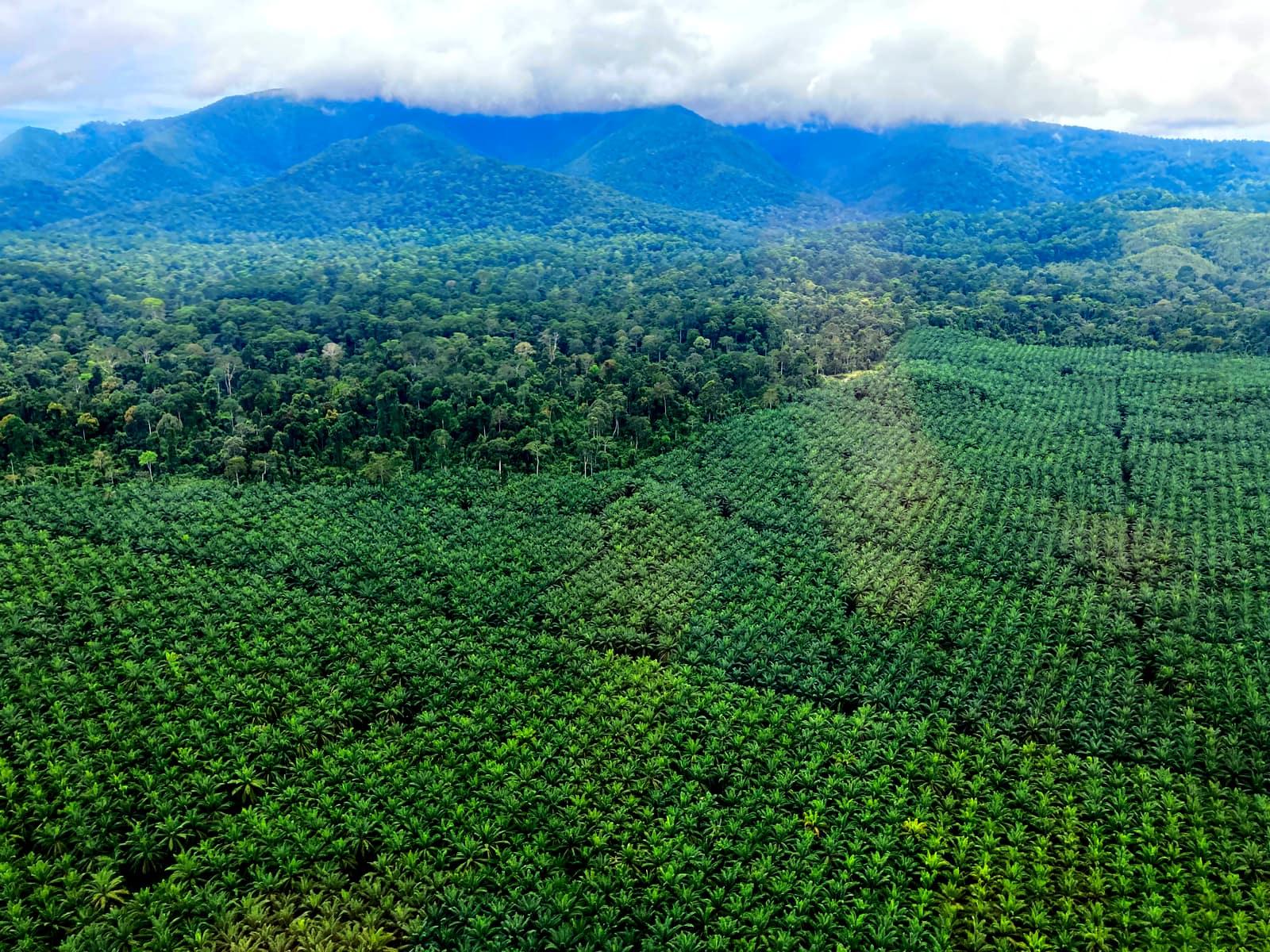
Ecosystem extent, the first of NPI’s four indicators, asks whether ecosystems are shrinking or expanding. REDD+ (reducing emissions from deforestation and forest degradation) has been answering that question for forests for more than a decade, with remote-sensed forest cover measured against reference areas at project scale and levels at the jurisdictional scale. That is the same landscape and jurisdictional scale where LEAP v2.0 and SBTN’s Landscape Engagement target now direct companies. SBTN’s 2024 supporting material for its first land methods cited existing frameworks for reducing emissions from deforestation as a basis for setting up landscape initiatives. SBTN’s No Conversion target asks companies to be deforestation-free upstream by 2030, the outcome REDD+ pays forest countries and communities to work towards.
The gap is that a no-conversion target only governs land in a company’s own supply chain. Deforestation driven by someone else’s demand, or by local drivers no global supply chain touches, sits outside it, and none of these frameworks creates a demand signal to pay for stopping it. Paying for that is what REDD+ was built to do, but REDD+ is already under-financed. All finance for forests totalled about USD 84 billion in 2023, against USD 300 billion a year needed by 2030, and only USD 1.3 billion of it came through carbon markets. A jurisdictional REDD+ programme, or a REDD+ project within one, is also a ready-made landscape initiative, with governance, a baseline and monitoring already in place, which is what a company needs to make a Landscape Engagement commitment credible. Landscape Engagement already requires a roadmap that quantifies investment in each landscape, but nothing in the new guidance gives companies a clear reason to pay for landscape outcomes, so REDD+ will stay under-financed.
Thousands of companies will now be asked whether the forests in their landscapes are shrinking, demonstrating real progress. But a metric is not a market. Knowing a forest is shrinking does not pay anyone to keep it standing.
The tools exist. Forest extent has been measured from space and verified for REDD+ for years. What is missing is anyone obliged to pay to keep a forest standing. Disclosure frameworks ask companies to report, and target frameworks ask them to clean up their own supply chains. Forests outside a value chain fall through the gap, and SBTi, as we argue on our SBTi page, still leaves avoided deforestation without a durable demand signal.
We should have moved on from only measuring. Carbon markets taught us that it is important to compare with what would have happened anyway, rather than just measuring and counting things, and newer methodologies such as Verra’s VM0047 for tree planting build that comparison in from the start. For REDD+, the criticism was rarely about measuring, and more about the counterfactual: what would have happened without the project, and so whether its results are additional. This is where there has been tremendous improvement and development. Our own work at belian on independent reference areas is part of it. Corporate landscape claims will face the same test: not just counting what is there, but showing what has improved, and what is additional.
We welcome this alignment. We want it to go one step further and recognise high-integrity REDD+, whether jurisdictional, nested or project-based, as a legitimate way for companies to act on the landscapes they depend on.
Questions and answers
›What are TNFD, SBTN and the Nature Positive Initiative?
TNFD, the Taskforce on Nature-related Financial Disclosures, helps companies and financial institutions understand and report how they depend on and affect nature. SBTN, the Science Based Targets Network, turns nature ambition into dated, place-based targets that are independently validated. The Nature Positive Initiative holds the shared definition of “nature positive” and, now, the shared way of measuring it.
›What changed on 13 October 2026?
Three bodies published coordinated updates. TNFD released version 2.0 of its LEAP assessment approach and updated recommendations. SBTN released Science-Based Targets for Nature 2.0. The Nature Positive Initiative launched the State of Nature Indicators and Metrics, now built into both.
›What are the Nature Positive Initiative’s four state-of-nature indicators?
Ecosystem extent, ecosystem condition, species extinction risk and species populations, each with site and landscape metrics. They distil more than 600 state-of-nature metrics that were in circulation before the release.
›How do TNFD, SBTN and NPI fit together?
Think of a company’s nature strategy as its finances. TNFD is the annual report: where the exposures sit and how they are managed. SBTN is the business plan: what will change, where and by when. NPI supplies the unit of account, so both documents count the same things the same way.
›Do the new nature frameworks pay for forest protection?
No. A no-conversion target only governs land in a company’s own supply chain, and none of these frameworks creates a demand signal to pay for stopping deforestation outside it. Paying for that is what REDD+ was built to do, but REDD+ is already under-financed.
Key references
- TNFD, SBTN and Nature Positive Initiative, “TNFD, SBTN and Nature Positive Initiative release aligned guidance to strengthen corporate action on nature” (13 October 2026)
- TNFD, “TNFD releases updated guidance and focuses on market capacity building and standard-setting support as adoption passes USD 26 trillion in AUM” (15 October 2026)
- TNFD, Guidance on the identification and assessment of nature-related issues: the LEAP approach, v2.0 (2026)
- TNFD, Recommendations of the Taskforce on Nature-related Financial Disclosures, with October 2026 updates
- SBTN, Science-Based Targets for Nature 2.0 (2026)
- SBTN, “Science-Based Targets for Nature 2.0: a practical route to credible action on nature” (13 October 2026)
- SBTN, Measure, Set and Disclose Land targets, Version 2 (2026)
- SBTN, Land Technical Guidance, Step 3: Measure, Set & Disclose, Version 2.0 (October 2026)
- SBTN, Step 3 Land Validation Requirements and Recommendations v1.0 (2025)
- SBTN, Claims and Disclosure Guidance v1.2 (2025)
- SBTN, Science Based Targets for Land v1: Supplementary Material, Landscape Engagement sections (2024)
- Nature Positive Initiative, “Landmark universal State of Nature Indicators and Metrics” (13 October 2026), and the State of Nature Indicators and Metrics framework
- IFRS Foundation, “ISSB agrees on the proposed way forward for nature-related disclosures” (2026), and ISSB technical activities update, DPOC October 2026
- IFRS Foundation, “ISSB consults on proposals for nature-related disclosures” (22 October 2026), exposure draft with comments open until 19 February 2027
- Convention on Biological Diversity, Kunming-Montreal Global Biodiversity Framework, Target 15 (2022)
- Boakes, E.H., Butchart, S.H.M. et al., “Exploring the use of state of nature metrics to screen global business operations for ecological sensitivity and to select priority sites for disclosure”, bioRxiv preprint, not peer reviewed (2026)
- Clancy, H., “Behind the push to harmonize nature frameworks”, Trellis (19 October 2026), source of the Drax quote
- UNEP and UN-REDD Programme, State of Finance for Forests 2025, figures as summarised in UN-REDD’s launch article
References last reviewed: November 2026.
Related reading
Where the belian.earth team has written on the questions this page raises.
Do the new TNFD, SBTN and NPI updates help or hinder forest protection?
by Chloé Naomi Swickard
The 13 October updates from TNFD, SBTN and the Nature Positive Initiative help REDD+ make its case, and do nothing to pay for forest protection.
Read articlePolicySBTi
SBTi sets the bar for corporate climate ambition: which emissions companies must cut, when, and by how much, and what role carbon credits, land use, and nature play in a credible net-zero claim. FLAG shapes demand from land-intensive companies; the Corporate Net-Zero Standard shapes the broader credit market.
Read morePolicyICVCM
The ICVCM sets the global threshold standard for quality in the voluntary carbon market. Its Core Carbon Principles and CCP label determine which credits are credible, which methodologies are sound, and where the market needs to go further: REDD+, reforestation, permanence, leakage, and buffer pools.
Read moreStay in the loop
Stay up to date with developments in independent reference area selection and carbon market baselining.