

In 2023, about USD 84 billion flowed to the world's forests, carbon markets contributed only USD 1.3 billion of that. The estimated need by 2030 is USD 300 billion per year.
On 13 October the three bodies shaping how companies treat nature published coordinated updates, and they don't seem to have done much to help the finance gap. The Taskforce on Nature-related Financial Disclosures (TNFD) released LEAP v2.0, its upgraded assessment approach. The Science Based Targets Network (SBTN) released Science-Based Targets for Nature 2.0. The Nature Positive Initiative (NPI) launched four common indicators for measuring the state of nature, now used in both.
We at belian.earth have spent many years, in other roles, writing and implementing the rules for REDD+, reducing emissions from deforestation and forest degradation, including Verra's project-based and Jurisdictional and Nested REDD+ framework. So our first question was simple. Do these updates help forests that are still standing, or make them easier to ignore?
Our answer: they help REDD+ make its case, and they do nothing to pay for forest protection.
What helps: shared state-of-nature indicators and deforestation-free supply chains
Measurement has been simplified: NPI reviewed more than 600 state-of-nature metrics and agreed a common minimum set: four core indicators, each measured at site and landscape level. Companies can still track more. The set sits alongside pressure and response metrics, and leaves sector- and place-specific measures to others. The first core indicator is ecosystem extent: is this ecosystem shrinking or expanding? REDD+ was built to answer that question, with satellite data on forest cover measured against reference levels. Corporate nature reporting now asks the question our sector already has an answer to, at least for forests (and other carbon project types monitor for similar conversion in wetlands and grasslands).
The scale of implementation aligns: LEAP v2.0 adds guidance on landscape and seascape approaches, and SBTN's Landscape Engagement target asks companies to work with established local partners in the landscapes they depend on. A jurisdictional REDD+ programme or a large REDD+ project in that landscape could easily serve as that kind of partner. Either comes with governance, a baseline and monitoring already in place, in many cases.
The outcome itself is partway there: SBTN's No Conversion of Natural Ecosystems target asks companies to make their upstream supply chains deforestation- and conversion-free by 2030 at the latest. That is the result REDD+ pays forest countries and communities to work towards, but leaves companies focused only on the lands they directly interact with.
What hinders: no finance for protecting forests outside supply chains
A no-conversion target only covers land in a company's own supply chain. Deforestation driven by someone else's demand, or by local drivers outside global supply chains, sits outside targets. None of these frameworks asks anyone to pay for stopping that.
That is the aim of REDD+. But disclosure tells investors where the risk sits, and targets ask companies to clean up their own sourcing. Neither puts money into a forest outside the value chain. The Science Based Targets initiative (SBTi), which sets the climate side of these targets, doesn't fill the gap either. It still leaves avoided deforestation without a durable demand signal.
There is a second, more subtle risk. The simplest way to meet a no-conversion target is to stop buying from places where conversion is happening. The Tropical Forest Alliance and Proforest warned in 2023 that SBTN's land targets could push companies to disengage from risky production landscapes. Those are the landscapes where REDD+ programmes most need partners and buyers. A company that walks away takes its leverage and its landscape funding with it, and the pressure on the forest stays.
The uptake numbers show where the energy has gone to date. 836 organisations have committed to report against TNFD's recommendations, and the financial institutions among them hold more than USD 26 trillion in assets. In comparison, just 18 companies hold validated science-based targets for nature. Companies are getting much better at describing their relationship with nature than at paying to change it. Perhaps the new alignment and simplification of the frameworks will help companies make that step.
That said, these new frameworks seem to have built a very good thermometer, without anyone being asked to pay for the cure.
So, help or hinder? What this means for the forest finance gap
They help, but only halfway. The updates make it easier to measure corporate data, and easier to connect to the landscapes companies depend on. They don't hinder forest protection directly. The risk is subtler: a company can now report on nature, set targets and feel it has done the work, while no one pays to protect standing forests adjacent to supply chains.
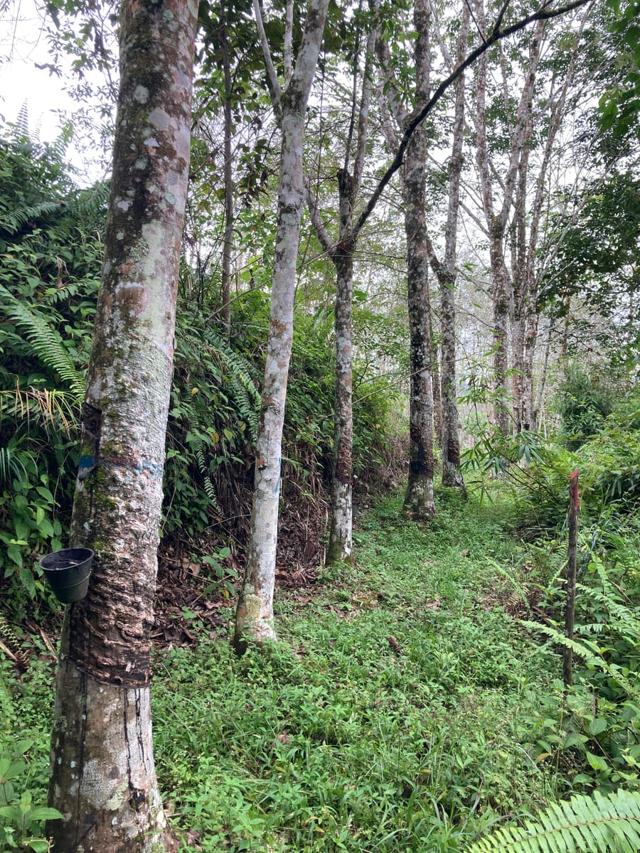
There is a measurement lesson here as well. State-of-nature metrics ask whether nature is improving in absolute terms. Carbon crediting asks a harder question: improving compared to what would have happened anyway. That counterfactual is where REDD+ has taken the most criticism, and where the most work has gone, including ours at belian on independent reference areas and dynamic baselines. Corporate landscape claims will need the same discipline before anyone believes them. The risk is that companies just get better at counting trees and species on the land they manage. Tree-planting projects under Verra's VM0047 already have to do more than count: they measure their growth against reference areas, land that shows what would have happened anyway.
The fix is not complicated, and part of it is already in the guidance. Landscape Engagement requires companies to submit a roadmap that quantifies the investment and funding behind their actions in each landscape. That money could support jurisdictional and nested REDD+ programmes and other landscape initiatives, and we should encourage companies to direct it there.
SBTN can make that easier by recognising high-integrity REDD+ as a legitimate way for companies to act on the landscapes they depend on, in Landscape Engagement and in transition plans. It should also reward companies that stay in high-risk landscapes and invest in turning them around, rather than those that simply leave.
Otherwise we will have agreed, in four precise indicators, how to report forest and habitat status, and still not agreed to pay for keeping them.
Sources
- UNEP and UN-REDD Programme (2025). State of Finance for Forests 2025, figures as summarised in UN-REDD's launch article.
- TNFD, SBTN and Nature Positive Initiative (2026). Aligned guidance release, 13 October 2026.
- TNFD (2026). Updated guidance and adoption passes USD 26 trillion in AUM, 15 October 2026.
- SBTN (2026). Science-Based Targets for Nature 2.0: a practical route to credible action on nature, 13 October 2026.
- SBTN (2026). Land targets, Version 2.
- Nature Positive Initiative (2026). State of Nature Indicators and Metrics launch, 13 October 2026.
- SBTN (2025). Step 3 Land Validation Requirements and Recommendations v1.0 (Landscape Initiative Roadmap and funding requirements).
- Tropical Forest Alliance and Proforest (2023). Accelerating Progress for Nature, Climate and People at Scale. September 2023.
Questions and answers
›What did TNFD, SBTN and the Nature Positive Initiative publish on 13 October 2026?
Coordinated updates. The Taskforce on Nature-related Financial Disclosures (TNFD) released LEAP v2.0, its upgraded assessment approach. The Science Based Targets Network (SBTN) released Science-Based Targets for Nature 2.0. The Nature Positive Initiative (NPI) launched four common indicators for measuring the state of nature, now used in both.
›Do the TNFD and SBTN updates help forest protection?
They help, but only halfway. They make corporate nature data easier to measure and easier to connect to the landscapes companies depend on. They do not ask anyone to pay for protecting forests outside a company's own supply chain, which is the aim of REDD+.
›How could companies fund REDD+ through SBTN's Landscape Engagement target?
Landscape Engagement requires companies to submit a roadmap that quantifies the investment and funding behind their actions in each landscape. That money could support jurisdictional and nested REDD+ programmes and other landscape initiatives. SBTN could make that easier by recognising high-integrity REDD+ as a legitimate way for companies to act on the landscapes they depend on.
Stay in the loop
Stay up to date with developments in independent reference area selection and carbon market baselining.
Policy context
The frameworks behind this piece, explained in plain English.
TNFD & SBTN
How corporate nature reporting, target-setting and measurement now fit together after the aligned releases of 13 October 2026, and what that means for forests.
Read morePolicySBTi
SBTi sets the bar for corporate climate ambition: which emissions companies must cut, when, and by how much, and what role carbon credits, land use, and nature play in a credible net-zero claim. FLAG shapes demand from land-intensive companies; the Corporate Net-Zero Standard shapes the broader credit market.
Read moreRelated posts

Who's Afraid of the Big, Bad Forest?
by Chloé Naomi Swickard
Permanence has been a sticking point for Nature-Based Solutions since the Kyoto debates. The ICVCM Permanence Trust may finally unlock long-term durability. Even then, the deeper question of how nature gets financed will remain.
VM0047's brave call is your ARR project's defining moment
by belian.earth
VM0047 locks the developer's matched reference areas at validation and keeps them fixed for the full crediting period. That single choice defines your ARR project's baseline for decades.

Why Forest Restoration Projects Need Robust Counterfactual Baselines
by Christopher D. Philipson
Every forest carbon project depends on a counterfactual baseline to demonstrate its impact. Whether avoiding deforestation or restoring degraded land, the underlying question is the same: what would have happened without the intervention?