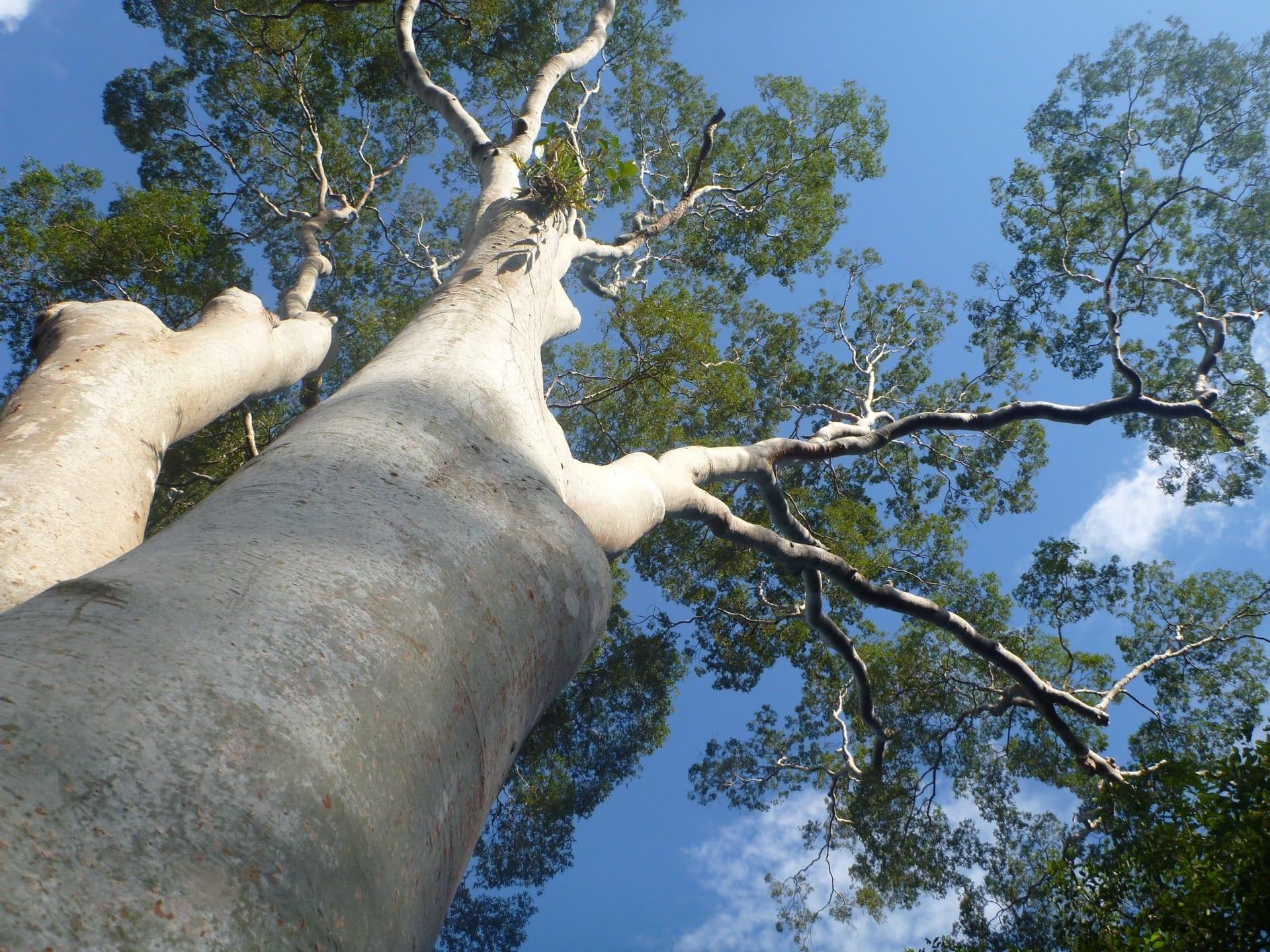
What you can measure from space is the landscape that biodiversity depends on. Habitat, its condition, its extent, its history of disturbance, and how all of that compares to similar places that were never protected. That is where our engine comes in.
ramet5 finds the areas of a landscape most comparable to a project area, using the satellite record, not hand-picked variables. For biodiversity work those comparisons carry the evidence about habitat: whether the protected area’s habitat did better than it would have done unprotected, stated with uncertainty, not as a single score.
We delivered our first paid biodiversity pilot in 2026, working with a nature finance organisation on reference area selection for small conservation projects.
Without reference areas, a project like that can only compare before with after: count everything before the work starts, count it again afterwards. That before-and-after conservation intervention comparison is how a great deal of conservation science has been done. More extreme climate events make it work even less well. If the years after are the hottest on record, the project looks like it failed when it did not. If they are kind, it looks like a triumph nobody can defend. The fix is to find the most similar habitats, go there too, and measure biodiversity in both the project area and the reference areas.
We are taking pilot projects now.
A full biodiversity product is in development, and this market is moving quickly enough that what we build will be shaped by the standards that emerge. If you are working on biodiversity credits, nature finance, or conservation projects that need a defensible answer to “what difference did this make”, we would like to hear what you are trying to do. The corporate side is moving too: see what the SBTi rules mean for forests and nature-based solutions.
Results here are reported with uncertainty attached, not as a single score. Why we report a range.
Questions people ask
- A payment for protecting or restoring the living things in a landscape, not the carbon in it. Like a carbon credit, it depends on a counterfactual: what would have happened to those species without protection?
- No, and that is what makes biodiversity baselines harder than carbon. What can be measured from space is the habitat biodiversity depends on: its condition, extent, history of disturbance, and how it compares to similar unprotected places.
- A full product is in development. belian.earth delivered its first paid biodiversity pilot in 2026, working with a nature finance organisation on reference area selection for small conservation projects.
Related reading
Where the belian.earth team has written on the questions this page raises.
Who's Afraid of the Big, Bad Forest?
by Chloé Naomi Swickard
Permanence has been a sticking point for Nature-Based Solutions since the Kyoto debates. The ICVCM Permanence Trust may finally unlock long-term durability. Even then, the deeper question of how nature gets financed will remain.
Read articleOpinionThe carbon baseline problem nobody wants to talk about
by belian.earth
The carbon market has an integrity problem. But while the industry obsesses over which biomass map to trust, the real uncertainty is in the carbon baseline.
Read articlePolicySBTi
SBTi sets the bar for corporate climate ambition: which emissions companies must cut, when, and by how much, and what role carbon credits, land use, and nature play in a credible net-zero claim. FLAG shapes demand from land-intensive companies; the Corporate Net-Zero Standard shapes the broader credit market.
Read moreResearchWhen Do More Species Maximize More Ecosystem Services?
Eleanor Slade et al. · Trends in Plant Science, 2019
Read moreResearchMonitoring, modelling and managing beaver (Castor fiber) populations in the River Otter catchment, Great Britain
Hugh Graham et al. · Ecological Solutions and Evidence, 2022
Read moreStay in the loop
Stay up to date with developments in independent reference area selection and carbon market baselining.